The growing strength of Naxal groups has emboldened them so much that they are harbouring ambitions of controlling more than a third of India's territories in the next two years, a latest intelligence report has said.
Basing its information on literature and pamphlets seized by the security forces in anti-Naxal operations, and also on interrogation of arrested guerillas, the intelligence report says the Naxal groups are aiming to liberate and control 35 per cent of India's land by the end of 2009, Home Ministry sources said.
In a fresh assessment of the Naxalite movement in the country, the report points out that ultra-Left groups having faith in Maoist ideologies have spread their activities to as many as 22 out of 28 states in the country, including states that were earlier not known to have any Naxal links like Delhi, Punjab, Uttarakhand and Gujarat. As many as 39 Left-wing extremist groups are currently operating in the country with a combined membership of more than a lakh. Not all of
them are violent though. CPI (Maoists) alone account for more than 90 per cent of violent incidents.
Though separate outfits, most of these Naxalite groups have common modus operandi, especially when it comes to dealing with Government and security forces. They see police and security forces just as major suppliers of weapons, the report, which was recently presented to the Home Ministry, points out. Hence the high frequency of attacks on police stations and security camps to loot firearms.
The security forces seized a number of pamphlets and booklets that urged the members to take up the cause of the local population and fight for them as endearing themselves to the local population was extremely vital for their own survival.
Identifying under-development as the primary reason for the spread of Naxalism, the intelligence report also documents factors which led to Chhattisgarh becoming the nerve-centre of Naxal activities. The state lies low on a number of development indices. Nearly 40 per cent of the population lives below poverty line, infant mortality is as high as 86 per thousand, 68 per cent do not have access to electricity and nearly half the population is devoid of drinking water at home. No wonder then that Chhattisgarh has emerged as the breeding ground for Naxal groups, the report says.
The report recommends more powers and facilities for police forces, and better coordination among security forces but goes on to say that military efforts alone would not be able to succeed against Naxalites. It has to be ably supplemented by developmental initiatives, it says.
Intelligence says...
• Naxalites aiming to control 35% of India's land area by 2009
• Naxal groups active in 22 out of 28 states
• Strategy is to attack police forces and loot their weapons
• At the same time, take up cause of locals and fight for them
• A total of 39 Left wing extremist groups present with combined membership of more than a lakh
Showing posts with label Terrorism in South Asia. Show all posts
Showing posts with label Terrorism in South Asia. Show all posts
Sunday, August 24, 2008

Nagori strategy stumps cops
Bangalore: Why have the Bangalore police not made progress in the 7/25 serial blasts probe while Ahmedabad police have arrested some SIMI men with connections in Karnataka?
A new strategy of working in sub-groups without coming into contact with the same faction members has made investigation difficult for Bangalore police. This is the reason why the police are finding it difficult to get a major breakthrough .
SIMI members of the Safdar Nagori faction work in different groups for different operations. But a set of common members has attended the meetings held by each group to monitor the activities.
The shift in SIMI strategy began in 2001 after SIMI split into two factions - one headed by Shahi Badar Falahi and another by Safdar Nagori. Since then, the Nagori group has been on a recruitment drive. When a new member joined, he would be attached to the same person who introduced him to SIMI. This way the new recruit will not come in contact with other groups.
T he i s - s u e came to light after Bangalore police interrogated those arrested by the Ahmedabad police, including two persons picked from Bijapur.
The pattern in the H o n n a l i - H u bl i case, Belgaum
arrests and the Ahmedabad case was that each group had held a series of meetings. After a detailed interrogation , the police discovered that three or four names were present in almost all the meetings. But they were not known properly by the arrested persons since they only came in the meetings and nowhere else. The police have pinned their hopes on these common names to find out the exact nature of activities that SIMI's Nagori group have been doing. The arrested persons have so far been unable to tell much about these elusive common names. A week ago, a team of police officials were sent
to Gujarat to get clues on the serial blasts in Bangalore on July 25. Home minister V S Acharya last Monday had also confirmed the arrest of a SIMI member from Karnataka.
"We have vital clues on the blasts here. The team will probe whether those arrested have links with the Bangalore blasts," Acharya had said. He had said the Bangalore police will work closely with the Gujarat police
Afganistan:More than 90 killed in coalition strikes: investigation
HERAT, Afghanistan (AFP) — An investigation has found that more than 90 civilians, mostly women and children, were killed in coalition air strikes days ago, an Afghan government minister told AFP Sunday.
President Hamid Karzai ordered the investigation into Friday's operation in the western province of Herat after Afghan officials said high numbers of civilians were killed but the US-led coalition said only 30 militants died.
The toll is one of the highest for civilians since international troops arrived in Afghanistan to topple the hardline Taliban regime in late 2001 and comes after a string of such incidents, most of them involving air strikes.
"We went to the area and found out that the bombardment was very heavy, lots of houses have been destroyed and more than 90 non-combatants including women, children and elderly people have died," the Islamic affairs minister told AFP after his visit to Shindand district earlier Sunday.
"Most are women and children," said the minister, Nematullah Shahrani.
Shahrani said his investigation was continuing and he was due to meet US Special Forces who had been involved in the operation with Afghan troops and commandos.
"They have claimed that Taliban were there. They must prove it," the minister said. "So far, it is not clear for us why the coalition conducted the air strikes," he said.
He said his preliminary investigation had also found that there was no coordination between the Afghan and international troops involved.
Karzai meanwhile issued a decree ordering the "immediate removal" of the top army general for western Afghanistan and a commando commander after the "tragic air strike and irresponsible and imprecise military operation."
General Jalandar Shah Behnam, head of the corps for western Afghanistan, and commando Major Abdul Jabar, were fired for "negligence and concealing facts," a statement from Karzai's office said. The pair would be interrogated, it added.
The strikes have drawn angry reactions from locals, who demonstrated on Saturday, torching a police vehicle and brandishing banners reading "Death to America."
A council of religious leaders for western Afghanistan demanded on Sunday the trial of those involved in the deaths and said it would call a demonstration in Herat on Tuesday.
"Once again the enemies of Islam have stained their hands with the blood of innocent people ... we, the Muslim nation, will not accept their apologies this time," it said in a statement.
The strikes, from gunships, were near the Shindand airfield that is used by international forces.
Most of the roughly 15 houses destroyed were those of men who worked at the airstrip as security guards, district chief La'l Mohammad Omarzai told AFP.
And many of the dead had gathered to mark the 40th day since the killing of a militia commander in accordance with Afghan tradition, he said.
Karzai has regularly appealed to the US- and NATO-led forces to take more care to avoid civilian casualties amid warnings they are costing the government and troops the goodwill of the war-weary Afghan people.
In another recent incident, an Afghan investigation found that around 50 civilians, most of them women, were killed in coalition air strikes early July when they had gathered for a wedding in the east.
The country's top rights group, which also has investigators on the ground in Shindand, says 900 civilians have been killed in insurgent attacks and military operations against rebels in Afghanistan this year.
"The Afghan government has frequently emphasised not harming civilians but unfortunately it has not been listened to very well," Afghanistan Independent Human Rights Commission chief executive director Hossain Ali Ramoz told AFP.
"The concern is that the government and international community will lose the credibility of the Afghan people," Ramoz told AFP.
Monday, August 18, 2008
Geelani apologiss for 'unintentional' leadership comment

Syed Ali Shah Geelani, senior separatist leader and chairman of the breakaway Hurriyat group, on Monday apologised for "unintentional use of words" that might have hurt the feelings of other separatist leaders after his speech triggered a leadership war.
Addressing mediapersons at his Hyderpora residence in Srinagar, Geelani said, If during my speech at today's mammoth rally any unintentional use of words by me has hurt the sentiments of any of my colleagues or anybody, I tender my apology for that.
I never intended to say anything that would hurt sentiments of anybody. I have always preferred unity over individual considerations and if I have used some words that may create or are likely to create a division among our ranks, I sincerely withdraw those words and apologize for the same, Geelani said.
Addressing a rally in Srinagar while sharing the dais with leaders of the moderate faction of the Hurriyat, Geelani had asked the crowd whether or not they all accepted his leadership.
This had, according to sources, angered other separatist leaders including Mirwaiz Umar Farooq, Shabir Shah and Muhammad Yasin Malik.
Geelani also clarified that his statement about the media during the speech did not intend to target any individual journalist.
I said the Delhi-based electronic channels and the owners of the print media were acting as part of India's war machine in Kashmir by blacking out the recent developments in J&K.
I have not spoken about individual journalists at all. The local journalists who work for the Indian media are part of our society who have to share the joy and grief of this land like other citizens here, he said.
We are Pakistanis, says Geelani
SRINAGAR: Hardline separatist leader Syed Ali Shah Geelani on Monday demanded the merger of Jammu and Kashmir with Pakistan, as leaders of the moderate Hurriyat faction spoke about independence and a dialogue over the state, triggering a leadership and ideological clash in the Muslim-dominated valley.
Tens of thousands of Muslim Kashmiris marched towards a United Nations office here amid heavy security arrangements, demanding UN intervention to solve the more than 60-year-old Kashmir dispute.
Demonstrators shouting "We Want Freedom", " Aiy zaalimo, aiy kaafiro , Kashmir hamara chhod do " (Tyrants and oppressors, leave our Kashmir), as they marched past police barricades near the UN Military Observer Group in India and Pakistan (UNMOGIP) office in the summer capital Srinagar.
Addressing the mammoth gathering at the Tourist Reception Centre here, Geelani said there was "no solution to the Kashmir issue other than merger with Pakistan".
"We are Pakistanis and Pakistan is us because we are tied with the country through Islam," he roared, as the crowd cheered and chanted along with him: " Hum Pakistani hain , Pakistan hamara hai " (We are Pakistanis, Pakistan is ours).
Much to the "ugly surprise" of the moderate Hurriyat leaders, who were sharing the stage with him, Geelani said the leadership issue of the Kashmiri separatist movement was "solved today".
"Do you have faith in my leadership? I will be faithful to you till my death and will carry everyone along," he said, as the crowd applauded him shouting in unison " zaroor " (certainly).
Moderate Hurriyat leader Mirwaiz Umar Farooq in his speech earlier called for a trilateral dialogue over Jammu and Kashmir, whose ownership is disputed by India and Pakistan who claim the region in full but rule in parts.
"We ask India to start a dialogue over Kashmir, open the Srinagar-Muzaffarabad road for trade and release all Kashmiris in Indian jails," he said. Muzaffarabad is the capital of Pakistan-administered Kashmir.
Pro-independence leader Yasin Malik said that Kashmiris want "complete freedom" - implying from both India and Pakistan.
" Is paar bhi lenge azadi, us paar bhi lenge azadi " (we will free both Kashmirs) was Malik's slogan, as the crowd also cheered him.
However, Geelani countered their remarks saying all these issues would be solved once Kashmiris get their right to self-determination and merge with Pakistan.
The two factions of the Hurriyat Conference had been at loggerheads but got united when the Kashmir Valley saw protests against the transfer of government land to the Amarnath shrine management two months ago.
Monday, August 4, 2008
Neo-Kashmiris threaten to go via Muzzafarbad route
Source: http://www.greaterkashmir.com/full_story.asp?Date=7_7_2008&ItemID=42&cat=1
The economic blockade has led to a demand from various sections of the society to open Srinagar-Muzaffarabad and Poonch-Rawalakote roads to ensure availability essential commodities to the Kashmir valley and Poonch, Rajouri districts of Jammu division. “This is a very serious issue. If they continue to block the highway for a long time, it would have serious ramifications and Kashmiris would have no choice but to seek alternate channels for their trade.
The desperation of Pakistan and Kashmiris to open the Pakistan route would lead to the re-establishing the trade between India and Pakistan. Thanks to Hindu groups, the possibility of trade between two countries is more likely thereby signalling a new brotherly relationship. Another sign that Kashmir needs India or pakistan more than they need Kashmiris. So please go ahead and open the trade route. Nothing like it.
Tamasha where a trade route is opened at the cost of the land for temple. And muslims dare to fight for Babri masjid ever, should seal their tongues and lips as the Muslims have shown the level of desperation.
Saturday, August 2, 2008
Terrorism and SWAT maps

Foresty Map of SWAT, Pakistan.
Terrorism from SWAT needs to be addressed by tribal commanders. They cannot remain oblivious that they are phatans and they have every right to house terrorists like Al-qaida men.
ISI needs to be countered in SWAT. Given blasts in india, I find it releavnt to provide maps of SWAT region so that focus of terror is re-dressed.

Detailed MAP of SWAT and surrounding regions.
Source: Google Images
Saturday, July 26, 2008
Indian Mujahideen seems to be a pseudonym
'There is no outfit called Indian Mujahideen
With Ahmedabad blasts, we are led to the same foolish theory of Indian Mujahideen(IM). The Indian has claimed responsibility for the Jaipur blasts.
source: May 15 2008: http://www.rediff.com/news/2008/may/15rajblast9.htm
It appears to be clever ploy by the terror groups by invoking the Indian Mujahideen. So it is the third time the name of this lesser known outfit is coming to the forefront. The first time that the country heard of this outfit was during the Uttar Pradesh court blasts in November last year 2007. Then the Jaiput blasts and now the Tsunami serial blasts in Bangalore/Ahmedabad.
http://www.rediff.com/news/2008/may/15rajblast9.htm says Intelligence sources quoting as
The Indian Mujahideen is a creation of the Bangladesh-based Harkat-ul-Jihadi and the rejuvenated banned outfit SIMI.
It was during the interrogations that took place in Karnataka where seven suspected terrorists were arrested did the name Indian Mujahideen figure for the first time. These persons were questioned about the outfit and they reportedly told the police that it was a pseudonym used by SIMI activists to divert the police. It was also revealed that for every person in the force, it was mandatory to have five different names.
Essentially Indian Mujahideen seems to be a pseudonym. This is a relatively new ploy by HuJI and SIMI in order to keep their identity concealed. After the UP blasts, a mail had been sent in the name of Mohammad Shameem, claiming that the Indian Mujahideen had carried out the attack
Ahmedabad And Bangalore blasts: Analysis
In two BJP ruled states, the blasts have occured in the state capitals. In all there are around 16 blasts in Ahmedabad on Saturday July 26 2008.. Also 8 Blasts in Bangalore on Friday July 25 2008. One bomb was defused in Bangalore on Staurday morning. The similarilites are a) BJP ruled state capitals b) Local elements are suspected c) Serial Blasts in multiple places in city within a short span d) Traffic points targetted e) Done near key places, but on roadsides f) done to create panic
g) hospitals were targetted after first sequence of serial blastsThe differences a) Casualaties higher in Ahmedabad in Bangalore b) Placed in roadside scrap places in Bangalore while in Ahmedabad , tiffin boxes and cycles used c) More blasts in Ahmedabad than bangalore
Analysis of Tsunami of serial blasts in India: Ahmedabad and Bangalore
In two BJP ruled states, the blasts have occured in the state capitals. In all there are around 16 blasts in Ahmedabad on Saturday July 26 2008.. Also 8 Blasts in Bangalore on Friday July 25 2008. One bomb was defused in Bangalore on Staurday morning.
The similarilites are
a) BJP ruled state capitals
b) Local elements are suspected
c) Serial Blasts in multiple places in city within a short span
d) Traffic points targetted
e) Done near key places, but on roadsides
f) done to create panic
g) hospitals were targetted after first sequence of serial blasts
The differences
a) Casualaties higher in Ahmedabad in Bangalore
b) Placed in roadside scrap places in Bangalore while in Ahmedabad , tiffin boxes and cycles used
c) More blasts in Ahmedabad than bangalore
13 Blasts in Ahmedabad after Bangalore
What is going on in this country? Why are so many cities facing serial blasts that too one after another. I am not from ahmedabad but I share the feeling of the bad people of the loss of lives and panic caused. This Week is indeed a black week.
We as Indians will remain resolute and fight back with our calmness. The terrorists will be definitrly caught.
Source:http://www.ndtv.com/convergence/ndtv/story.aspx?id=NEWEN20080058856
13 blasts rock Ahmedabad, 2 killed
Thirteen blasts have rocked Ahmedabad killing 2 and injuring at least 20 people on Saturday evening.The first blast took place in Bapunagar at 6:45 pm and all the blasts took place within a span of 15 minutes.The blasts took place in Maninagar, Sarkhej, Isanpur, Bapunagar and Haksar. Maninagar being Gujarrat CM Narendra Modi's constituency.The bombs were planted on cycles in crowded marketplaces and tiffin boxes.Police have rushed to the affected spot and there is no confirmation on the kind of explosion.The blasts have taken place primarily in eastern part of Ahmedabad, which are upper middle class dominated areas.Security agencies have been put on high alert and mobile phones blocked.They are trying to figure if more bombs are there like in the case of Bangalore blasts. These blasts take place exactly a day after eight low intensity serial blasts in Bangalore.Prime Minister Manmohan Singh and President Pratibha Patil have condemned the serial blasts.
Friday, July 25, 2008
Bangalore blasts and cowards as terrorists
Cowards call themselves Terrorists. Whatever the message, whatever the impression, Bangalore is not a soft or hard target. The idea to stop the Bangalore progress wont be successful. Bangalore will get back to work. How long can the cowards get away? I have faith the cowards will be caught.
Some interesting things that came to my mind
a) The blasts occured near scarp yards near bus routes or bus stops. These are not peak hour traffic times for buses. i travel by buses, even today after blasts I travelled by bus, so the people who did this seem to me have no idea about bus peak times.
b) Some blasts were near or across petrol pumps. ex- Madivala and Vittal Mallya. I dont buy the idea that the terrorists wanted to send a message softly. They wanted maximum damage and luckily none of the petrol pumps were affected.
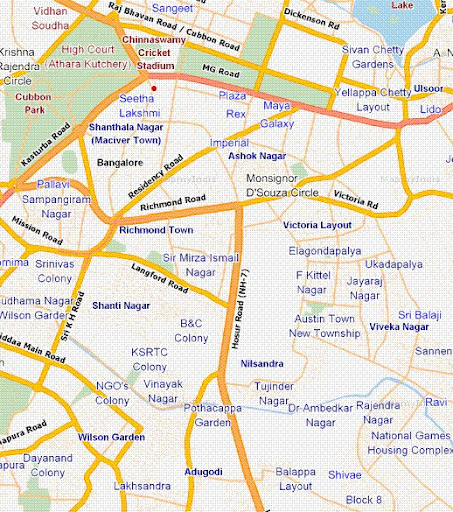
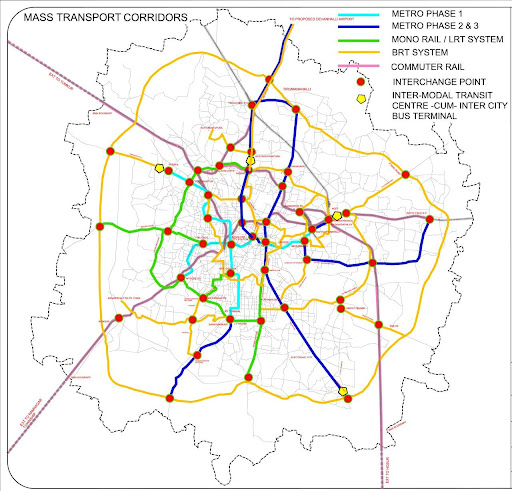
c) The places are traffic key areas. The idea was to jam the bus routes of IT crowd heading out to homes after friday and their home towns. You can see the blue line in the south part of image below which was the principal target. That is the arterial Hosur road . the terrorists were defeated
Categorically the coward terrorists have failed. Bangalore is a dream, you cant kill dreams by panic, fear, murders and blasts. Here I am fighting back using my tool. The pen, the web blog.
Some interesting things that came to my mind
a) The blasts occured near scarp yards near bus routes or bus stops. These are not peak hour traffic times for buses. i travel by buses, even today after blasts I travelled by bus, so the people who did this seem to me have no idea about bus peak times.
b) Some blasts were near or across petrol pumps. ex- Madivala and Vittal Mallya. I dont buy the idea that the terrorists wanted to send a message softly. They wanted maximum damage and luckily none of the petrol pumps were affected.
c) The places are traffic key areas. The idea was to jam the bus routes of IT crowd heading out to homes after friday and their home towns. You can see the blue line in the south part of image below which was the principal target. That is the arterial Hosur road . the terrorists were defeated
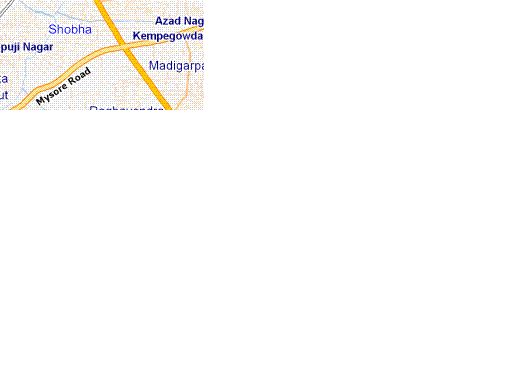
 d) The principal ares of blast were the Hosur road and Mysore road
As per http://www.forbes.com/afxnewslimited/feeds/afx/2008/07/25/afx5253941.html
"Police said the blasts were of low-intensity but enough to create panic in the city. Police were seen investigating the blast sites to determine the chemicals used.
'Most of the blasts took place between 1:30 pm and 1:45 pm,' Bangalore police commissioner Shankar M Bidari said at one of the blast sites.
The injured have been admitted to the Vittal Mallya Hospital, near which one of the bomb blasts took place.
Noone has claimed responsibility for the bombs, but city police said the blasts bore the hallmark of a terrorist attack.
'We are investigating and will quickly book those involved in the blast,' Bidari said."
"The bombs exploded in arterial roads in Madiwala, Nayandahalli, Adugodi, Rajaram Mohan Roy Circle and Sarjapur." All these are connected to Hosur road as shown below.
Nayandahalli is only exception in the image below not connected to Hosur road. It is connected to Hosur road . It is linked to Mysore road
Categorically the coward terrorists have failed. Bangalore is a dream, you cant kill dreams by panic, fear, murders and blasts. Here I am fighting back using my tool. The pen, the web blog.
Pen is mighthier than sword.
Subscribe to:
Posts (Atom)

 Posts





